
Facility Layer
Production areas, warehouse aisles, cold storage spaces, offices, and multiple locations.
KeenPlex helps manufacturing and logistics organizations reduce technology interruptions, strengthen infrastructure reliability, improve operational visibility, and protect the systems that support production, inventory, quality, and continuity.
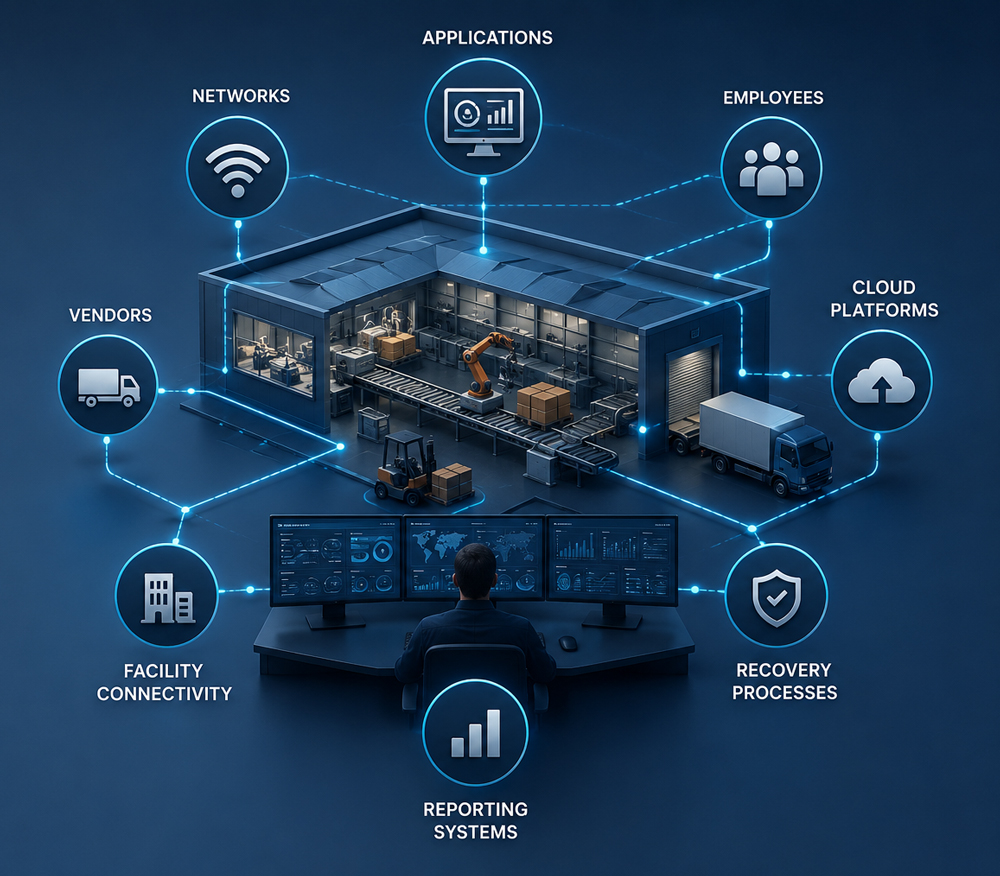
Production and logistics operations depend on networks, applications, employees, vendors, cloud platforms, facility connectivity, reporting systems, and recovery processes working together. A failure in one dependency may interrupt the larger operation.
Connectivity problems may interrupt access to applications, reporting, communications, and operational information.
Unavailable or poorly performing systems may delay production reporting, inventory activity, order processing, or quality workflows.
Employees may lose productive time when access, devices, accounts, or permissions fail.
Operations may slow when ownership is unclear across providers, equipment vendors, internet providers, and software companies.
Leadership may not know how quickly important systems can be restored after a serious interruption.
Infrastructure weaknesses may appear as slow systems, unstable wireless coverage, recurring support issues, inaccessible applications, monitoring gaps, or inconsistent performance between facilities. KeenPlex evaluates how these conditions affect the operation before recommending improvements.
Production areas, warehouse aisles, cold storage spaces, offices, and multiple locations.
Network reliability, wireless coverage, internet access, and facility connections.
Servers, cloud platforms, employee devices, identity, access, and business applications.
Production data, inventory records, quality documentation, and leadership reporting.
Monitoring, backup systems, recovery processes, vendor coordination, and decision ownership.
Warehousing and cold storage environments receive additional focus on wireless reliability, monitoring, refrigeration dependencies, inventory risk, and continuity.
Manufacturing and logistics organizations rely on connected employees, vendors, applications, facilities, and cloud platforms. Weak access controls, compromised accounts, unavailable systems, or inadequate recovery processes may interrupt operations even when production equipment remains functional.
An account or access path becomes exposed

Business systems and information may be reached
Access, reporting, or coordination may be disrupted
Production, quality, inventory, or continuity may be affected








Legacy technology, manual reporting, disconnected systems, and limited visibility can make recurring operating problems harder to identify and prioritize.
Employees collect and combine information manually, delaying leadership visibility.
Production, inventory, quality, and business information may remain separated across platforms.
Leadership may struggle to identify where delays, interruptions, or recurring problems begin.
Important procedures and system knowledge may depend on a small number of employees.
Problems are addressed after operations are affected rather than through planned monitoring and maintenance.
Different locations may operate with different configurations, vendors, and support processes.
Spreadsheets → Manual reports → Disconnected applications → Delayed decisions
Connected information → Clear monitoring → Prioritized alerts → Executive visibility


Delayed production, reporting, or inventory activity
Inconsistent access to warehouse or facility systems
Slower visibility into quality process interruptions
A longer or less predictable operational interruption
Important operating conditions may not be recognized quickly
Additional manual work and limited decision visibility
Manufacturing and logistics organizations share concerns around reliability and continuity, but each environment protects a different executive outcome.
Improve the reliability and visibility of the technology supporting plant operations so leadership can identify constraints and respond more effectively.
Strengthen the infrastructure, monitoring, and recovery processes that support inventory protection and uninterrupted warehouse operations.
Improve the reliability, visibility, and security of the systems supporting quality processes, production information, traceability, and intellectual property.
A problem in one operating layer may create consequences across people, processes, technology, information, and continuity.
Operators, supervisors, quality teams, warehouse employees, vendors, and leadership
Production reporting, inventory movement, quality review, shipping, receiving, and escalation
Networks, wireless, applications, employee devices, servers, cloud platforms, and identity

Production data, inventory records, quality documentation, reports, and intellectual property
Monitoring, backup, recovery, communications, ownership, and testing
KeenPlex examines how people, processes, systems, infrastructure, security, and recovery work together before recommending technology.
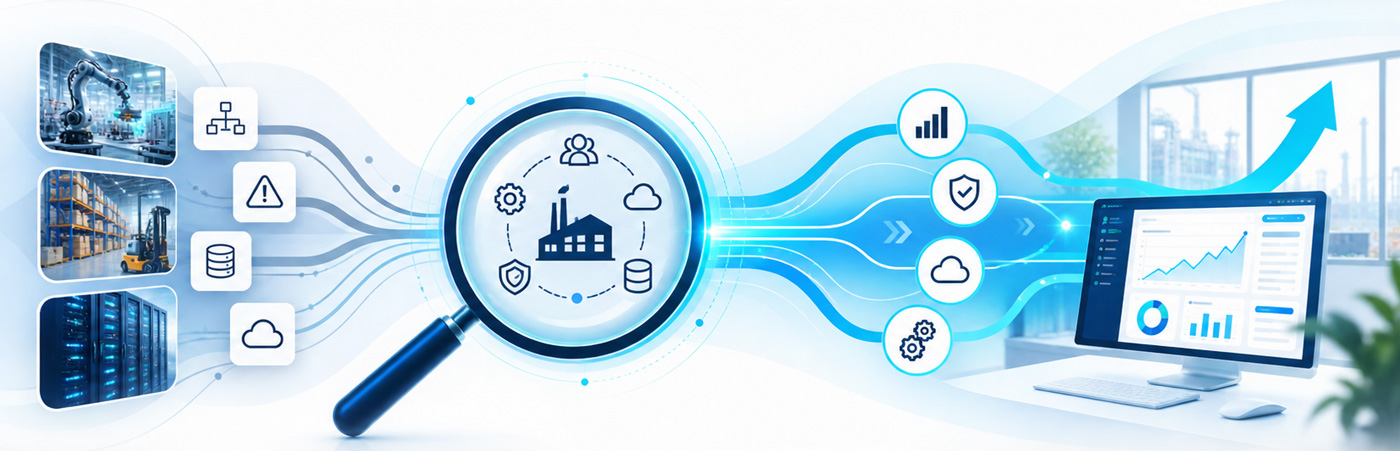
Clarify whether leadership is protecting production uptime, inventory, quality, continuity, or operating visibility.
Examine the system, workflow, infrastructure, information, or risk condition limiting the outcome.
Determine how the condition may affect production, inventory, quality, productivity, customer commitments, or resilience.
Connect managed technology, cybersecurity, cloud platforms, automation, monitoring, and continuity into one operating strategy.
Evaluate interruptions, recovery performance, workflow consistency, reporting quality, and operating visibility.
Each pathway starts with the operating problem and connects the right capabilities around the outcome leadership needs to protect.
Improve monitoring, maintenance, employee support, network and cloud management, vendor coordination, and executive reporting.
Improve critical service identification, recovery objectives, backup coverage, restore testing, communications, and continuity planning.
Strengthen identity, endpoints, email, monitoring, response, employee practices, and executive risk visibility.
Test whether an attacker could reach critical business systems, prioritize remediation, and verify corrective work.
Improve notifications, approvals, information movement, repetitive reporting, and process consistency.

Improve visibility and control when employees use AI with production information, quality records, intellectual property, or customer data.
Connect relevant information, reporting, and dashboards so leadership can make better informed operating decisions.
The Business Continuity Assessment examines the systems, dependencies, recovery processes, and responsibilities required to maintain or restore essential operations.
Request a Business Continuity AssessmentThe Cybersecurity Assessment evaluates how identity, access, endpoints, email, cloud platforms, recovery, and employee practices may affect operational resilience.
Request a Cybersecurity AssessmentBusiness systems, sensitive information, identity, access, endpoints, email, Microsoft 365, backup, vendor access, employee practices, and executive visibility.
An executive risk summary, prioritized action plan, recommended security improvements, and an optional Attack Path Assurance path.

For manual production reporting, repetitive data entry, approval delays, corrective action handoffs, and disconnected processes.
Request a Workflow Review
For organizations whose employees may use AI with quality information, production data, customer information, or intellectual property.
Review AI Readiness
For organizations that want evidence showing whether a real attack path can reach important business systems.
Review Attack Path ReadinessThe right operating strategy can help reduce recurring friction, improve visibility into constraints, support consistent recovery planning, and create clearer technology priorities.
Until validated customer results are available for publication, these operating examples show how KeenPlex would frame the condition, consequence, and improvement path.

Recurring network and wireless problems are mapped to affected workflows, vendor ownership, and a prioritized infrastructure plan.
Review the continuity path
Critical business services, backup coverage, recovery objectives, testing, communications, and ownership are reviewed together.
Review the continuity path
Manual reporting and disconnected information are examined to identify practical opportunities for better monitoring and decision support.
Review connected solutionsKeenPlex supports industrial machinery manufacturers, medical device manufacturers, warehousing operations, and cold storage facilities where business systems, infrastructure, security, and continuity affect operating performance.
Reliable connectivity, monitored infrastructure, supported applications, clear vendor ownership, and tested recovery processes can reduce avoidable technology friction around production.
It should review critical services, dependencies, recovery objectives, backup coverage, restore testing, communications, decision ownership, operating gaps, and prioritized next steps.
Begin by mapping coverage, device use, facility conditions, application requirements, network design, monitoring, and the workflows affected by weak connectivity.
KeenPlex first identifies the operating constraint and business consequence, then prioritizes practical improvements around reliability, visibility, access, integration, and recovery.
KeenPlex can review manual reporting, disconnected information, notifications, approvals, and dashboards to identify opportunities for better information flow and decision visibility.
A practical program considers identity, access, endpoints, email, vendor access, cloud platforms, employee practices, AI use, monitoring, and recovery together.
Backup creates a copy of information. Recoverability considers whether critical systems and information can be restored within useful objectives through tested processes and clear ownership.
Attack Path Assurance tests whether identified conditions can be combined into a path toward important business systems, helping leadership prioritize and verify remediation.
Yes. Vendor coordination can clarify responsibilities across business technology, connectivity, applications, and support, while specialized equipment remains within the confirmed scope of its provider.
Begin with Business Continuity when interruption and recovery are the main concern. Begin with Cybersecurity when access, exposure, or sensitive information is the stronger concern.
Select your industry to explore the operating issues most relevant to your environment, or begin with an assessment that identifies where infrastructure, cybersecurity, recovery, or visibility may be limiting resilience.